
Calgary & surrounding areas
Wasp Treatment
A wasp nest is a location problem before it is a treatment problem. The nest is rarely where people are getting stung — it is up inside a soffit, under a deck, in a shed wall or in the ground at the edge of a lawn — and treating the wrong spot only makes the colony defensive. We find the nest, treat it at the entrance, and remove it where it can be reached safely.
Same-day service · Guaranteed results
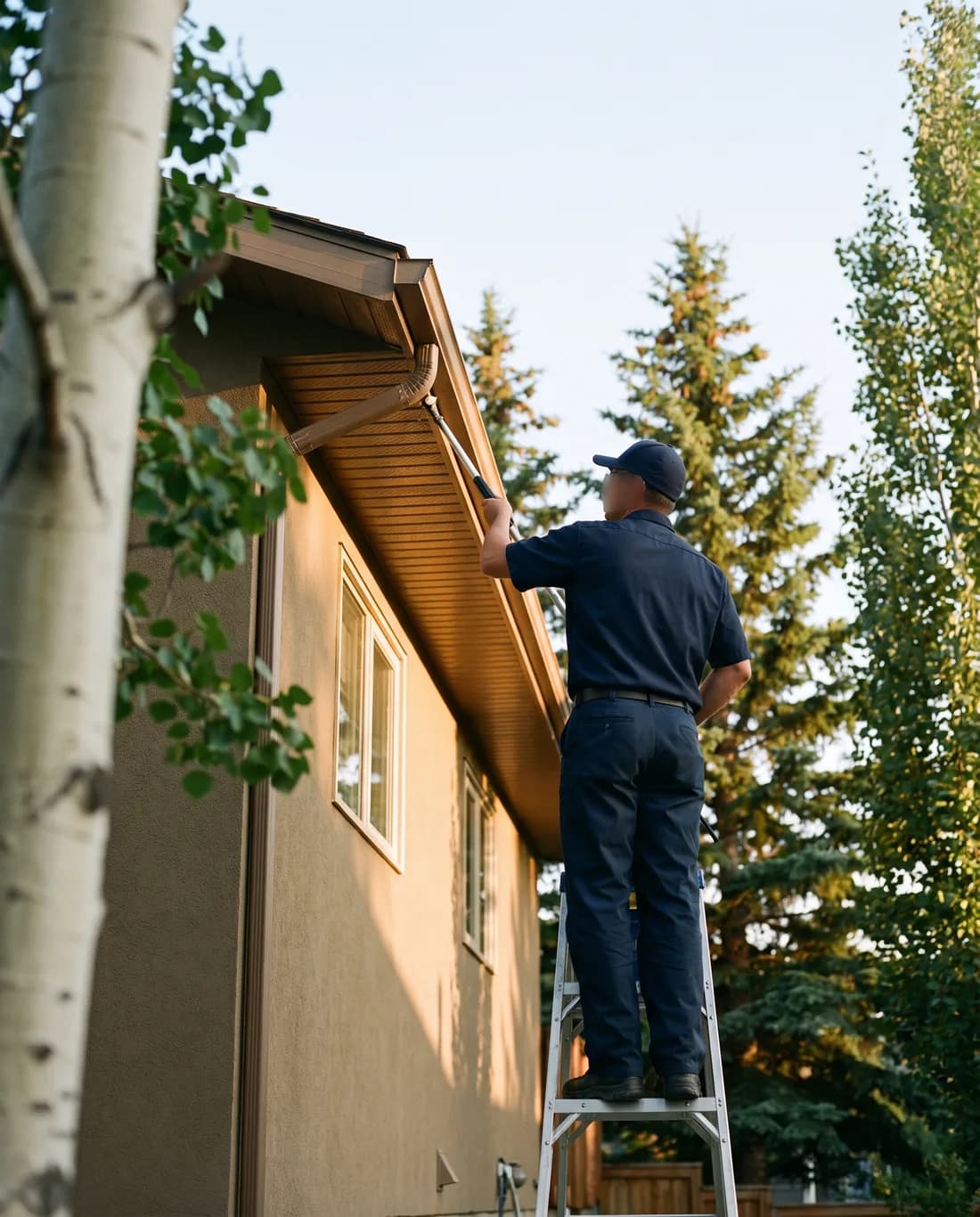
How we handle it
- 01
Nest location
We watch the flight line back to the entry point rather than treating the yard and hoping. Nests inside soffits, wall voids and ground cavities are found this way, and it is the reason a proper walk around the building matters more here than the choice of product.
- 02
Access & species check
We assess the height, the access and whether the nest opens into an occupied space, and we confirm what is actually flying. Wasps, bumble bees and honey bees get lumped together constantly, and we will tell you what you are looking at before anything is applied — a honey bee colony is a beekeeper’s job, not ours.
- 03
Treatment & nest removal
Licensed treatment placed at the nest entrance so returning foragers carry it in, which deals with the workers out flying as well as the ones at home. Where the nest can be reached safely we remove the physical structure rather than leaving it in place.
- 04
Sealing & follow-up
Once the colony is dead the entry point gets sealed — and not a moment before, because sealing a live nest drives the colony inward looking for another way out, which is how wasps end up inside a bedroom. We check back to confirm there is no residual activity. And our results are guaranteed.
What you might notice
- 01A steady flight line of wasps in and out of one point on the building
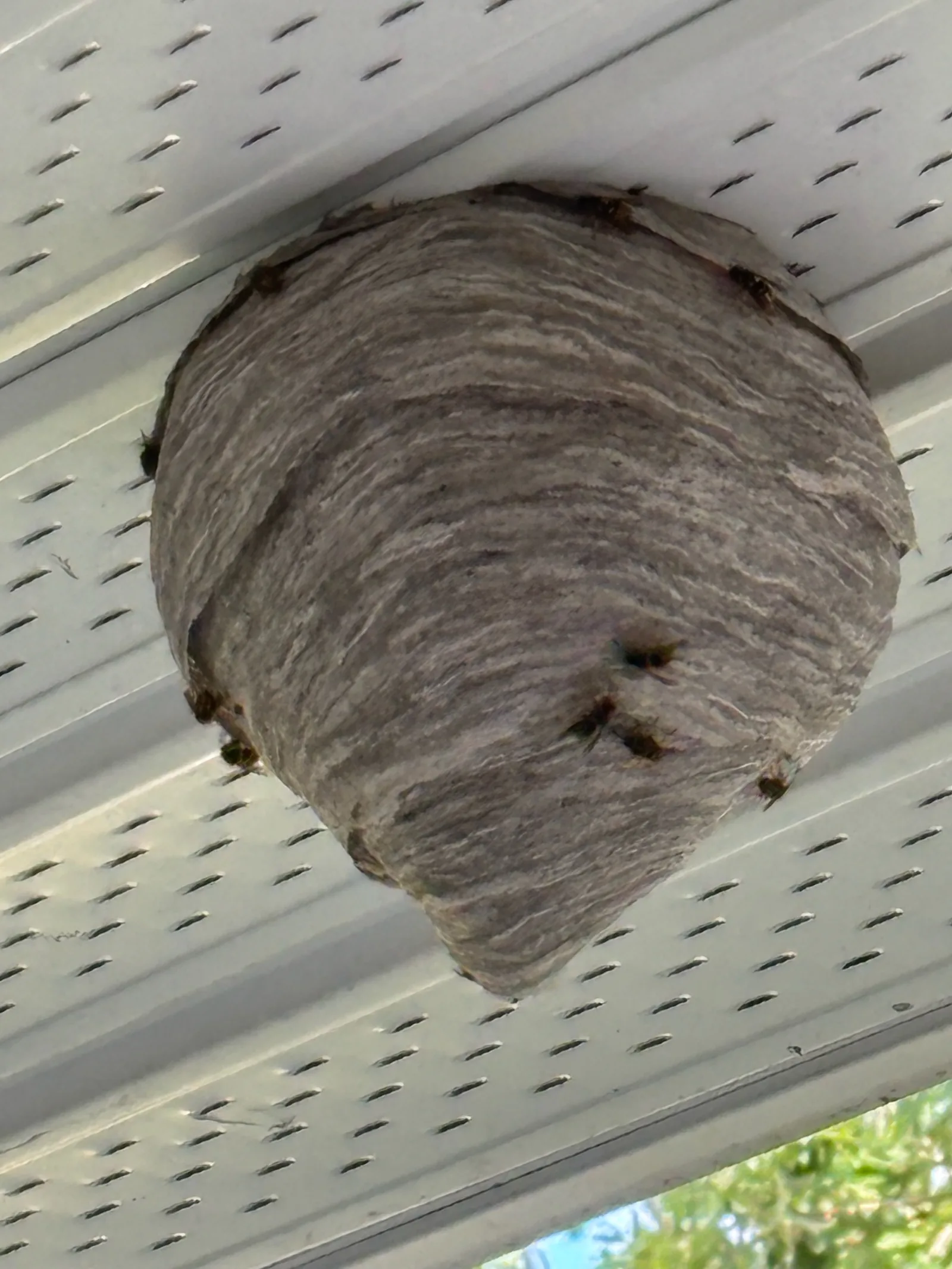
- 02A papery grey nest under a soffit, eave, deck or shed roof
- 03Wasps disappearing into a gap in siding, stucco or a vent
- 04Ground activity at a lawn edge, retaining wall or compost pile
- 05Aggressive wasps around food, drinks and bins in late summer
Every job includes
- An Alberta-licensed technician, not a subcontractor
- A written record of what was found and what was applied
- Same-day service whenever the schedule allows
- Guaranteed results: if they come back, so do we
Same-day service when the schedule allows. Book now and it’s handled.
Where we work
Wasp Treatment across Calgary
Wasps are our busiest call of the Calgary late summer — soffits and eaves on two-storey homes, under decks and back steps, in sheds and detached garages, and around restaurant patios and school grounds where people and food are in the same place. We take wasp work across Calgary and out to Airdrie, Chestermere, Cochrane, Okotoks and Strathmore.
- Calgary
- Airdrie
- Chestermere
- Cochrane
- Okotoks
- Strathmore
Common questions
Wasp Treatment — straight answers
Why are they so much worse in August?
Because the colony has spent all spring and summer growing and reaches its peak in late summer, at exactly the point the queen stops producing brood. The workers switch from hunting protein for larvae to seeking out sugar for themselves, which is why they suddenly appear at your patio table and around the bins. The nest was there in June — it was just small and quiet.
Can I not just spray the nest myself?
A small exposed nest at arm height is sometimes a reasonable thing to handle yourself, at dusk, with an exit route. Anything on a ladder, at roof height, or inside a wall or soffit void is where people get hurt, and a can of aerosol into a void nest mostly succeeds in agitating a colony you cannot see. Ground nests are the other one worth leaving alone — they are easy to stand on and hard to escape from.
Will they come back to the same nest next year?
They will not reuse the old nest, but they may well use the same site. A soffit gap or a deck cavity that suited one queen tends to suit the next one, which is why sealing the entry point after the colony is dead is the part that changes next summer. If you have had a nest in the same spot two years running, that is the gap talking.
What if it turns out to be bees?
We identify before we treat, and we say so if what you have is a bee colony rather than wasps. Bumble bee nests are often left alone where they are not in a high-traffic spot, and honey bees belong with a beekeeper. We are not going to treat a pollinator colony as a wasp job because the call came in as one.
Related services
Contact
One call, and it’s handled.
Same-day service · Guaranteed results